












Is 5G Home Internet Good?

Aspen Henriksen
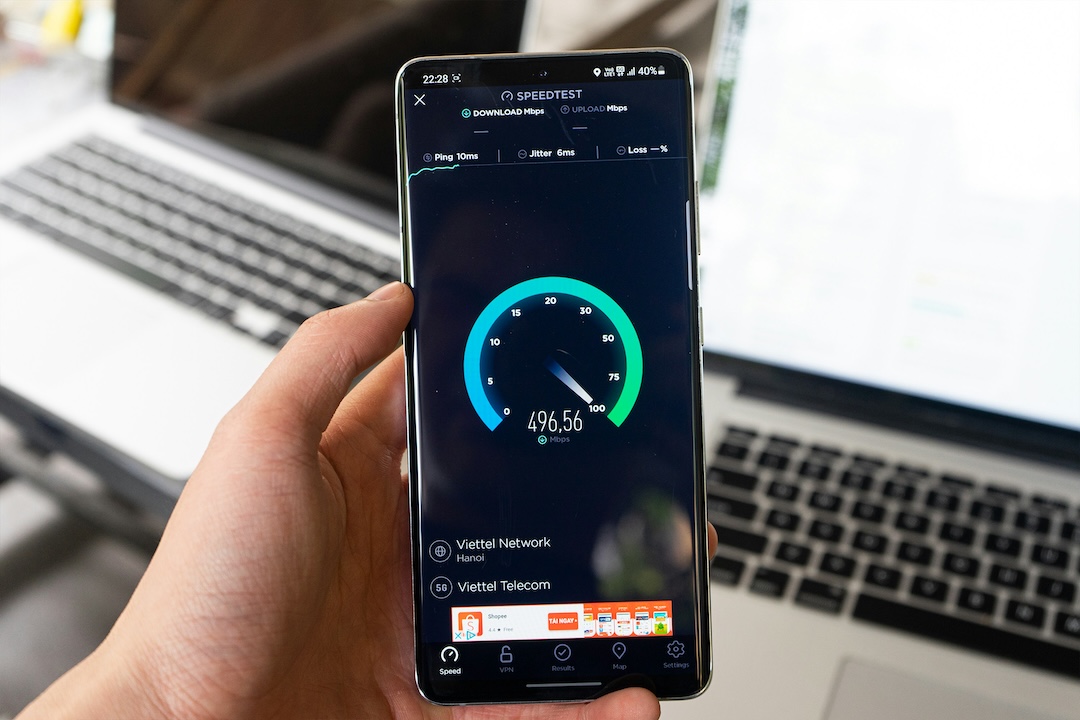
You just moved into a new place, and the cable company quotes you a three-week wait for installation. Or maybe you’re out in the country, where fiber rumors occasionally pop up, but it’s never been a real option. Either way, you need to log on for work, school, or just funsies, and internet plans are few and far between. Then someone mentions they just plug in a little box and get online with 5G. Wait, what? 5G internet? That’s a thing?
With no need for a technician, no trench to dig, and no waiting, it sounds almost too easy. All you need to do is order the gateway device, find a power outlet, and pull a signal from the nearest cell tower.
So, is 5G home internet good for real, or is it a compromise dressed up as a solution?
The Quick Answer
Yes, at least, for the right household.
5G home internet has moved well past its “experimental” phase. Providers like AT&T, T-Mobile, and Verizon now treat it as a real broadband category, not a stopgap. It won’t outperform fiber, but it’s not trying to.
What 5G offers instead is speed that’s good enough for most everyday use, pricing that’s often lower than cable, and a setup you can do yourself in about ten minutes.
The tradeoff is consistency. That is, your experience depends heavily on how strong 5G coverage is at your specific address.
How It Actually Works
With no cable running to your house to connect you, how does it work?
In short, a gateway device—usually provided free by the carrier—sits near a window or in a high spot inside your home. It pulls a signal from the nearest 5G tower and turns it into Wi-Fi for your devices, just like your phone gets data. It’s just parked in one place instead of moving around with you.
Where It Shines
5G home internet is a strong fit if you’re renting and don’t want to commit to a long-term contract, living somewhere fiber or cable hasn’t yet reached (and honestly, may never do so), or simply tired of overpaying for service that isn’t much faster.
Bundling it with an existing cell phone plan often knocks the price down further. Industry estimates put 5G home internet subscribers in the U.S. past 20 million by the end of 2026—up from around 12 million at the start of the year. Growth in fixed wireless internet has averaged nearly 20% every year. That tells you this isn’t a niche workaround anymore. It’s becoming a default choice for many households.

Where 5G Home Internet Falls Short
5G Home Internet isn’t right for all households. Your speed depends on which slice of 5G spectrum your provider is using in your area. Mid-band coverage delivers a noticeably better experience than low-band, and most residential customers are on one of those two.
True high-speed mmWave is still mostly limited to dense city blocks. Add in network congestion during peak evening hours, and you’ll notice speeds dip when everyone in the neighborhood is streaming at once.
Upload speeds also tend to lag behind download speeds, which matters more than people expect.
What About Streaming, Gaming, and Working from Home?
I’m all too familiar with this option as I use 5G as a backup when my satellite internet is interrupted.
For streaming, 5G home internet does well. Even on the lower end of typical speeds, you’ve got more than enough bandwidth for a few simultaneous 4K streams. Apple TV, Netflix, and Hulu only ask for 25 Mbps (sometimes less) per stream. Most 5G connections clear that easily. Casual and most online gaming works fine too, with typical latency in a range that won’t ruin your match.
Where it gets more situational is working from home (like me!). If your job is mostly email and browser tabs, you’re fine. If, on the other hand, your day is built around video calls or uploading large files, that weaker upload speed can start to show, especially if someone else in the house is also on a call.
Is 5G Home Internet Good Takeaways
If you’re the renter who just wants internet running today, or the rural household that’s never had a real broadband option, 5G home internet is good. It’s not just a consolation prize or the best you can get.
If you’re chasing the fastest possible speeds, need rock-solid upload performance, or have fiber available at your address, that’s still likely the better call. But we all have our own reasons. (Maybe you’ve had a not-so-great experience with what you thought was the only game in town.)
Before you decide, it’s a good idea to check what kind of 5G coverage—mid-band or low-band—actually reaches your house. That one detail tells you more about your real-world experience than any spec sheet will.













.svg)
.svg)